Head-to-head
Vidalytics vs Wistia
Pick Vidalytics if your video sells to cold paid traffic and you want a proven conversion player with per-second retention, heatmaps and sound-first autoplay; pick Wistia if your video's job is B2B content marketing and lead capture inside a content library with CRM automation. If you buy media on the actual sale, a dedicated attribution player like TrackPlay ties each play to the cart-verified purchase in a way neither of these attempts.
Quick answer
Pick Vidalytics if your video sells to cold paid traffic and you want a proven conversion player with per-second retention, heatmaps and sound-first autoplay; pick Wistia if your video's job is B2B content marketing and lead capture inside a content library with CRM automation. If you buy media on the actual sale, a dedicated attribution player like TrackPlay ties each play to the cart-verified purchase in a way neither of these attempts.
| Vidalytics | Wistia | |
|---|---|---|
| Best for | Direct response | B2B content |
| From | $19/mo | $79/mo |
| Billing | Bandwidth + videos | Storage + seats |
| Free plan | 3 videos, 50GB | 25GB, 1 user |
| Sale attribution | Conversion tracking | Signals add-on |
Where Vidalytics pulls ahead
What works
- Video conversion tracking pins the exact second a viewer converted, and heatmaps plus buyers-versus-non-buyers segments show where attention drops.
- Smart Autoplay falls back to muted autoplay and restarts with sound on the first click, the feature its users credit for the biggest conversion lifts.
- A large, named direct-response user base and years in market give it a track record newer players do not have yet.
What to watch
- Pricing is on bandwidth and video count, so a long VSL on heavy cold traffic can run up overage at about $0.33 a GB.
- Attribution stops at conversion tracking and CRM tags. It does not post the cart-verified sale back to the ad platforms server-side.
What you are actually choosing between
Vidalytics and Wistia both host your video and both show you how it is watched, but they were built for different jobs and pointed at different buyers. Vidalytics is a conversion player: a host made for direct-response marketers who run sales videos to cold paid traffic and judge the player on whether it lifts sales. Wistia is a B2B video marketing platform: a content library with a beautiful player, lead capture and marketing automation, built for teams whose video supports a longer sales cycle. If you are down to these two, the deciding question is whether your video's job is to make the sale on the page or to feed a content-marketing funnel.
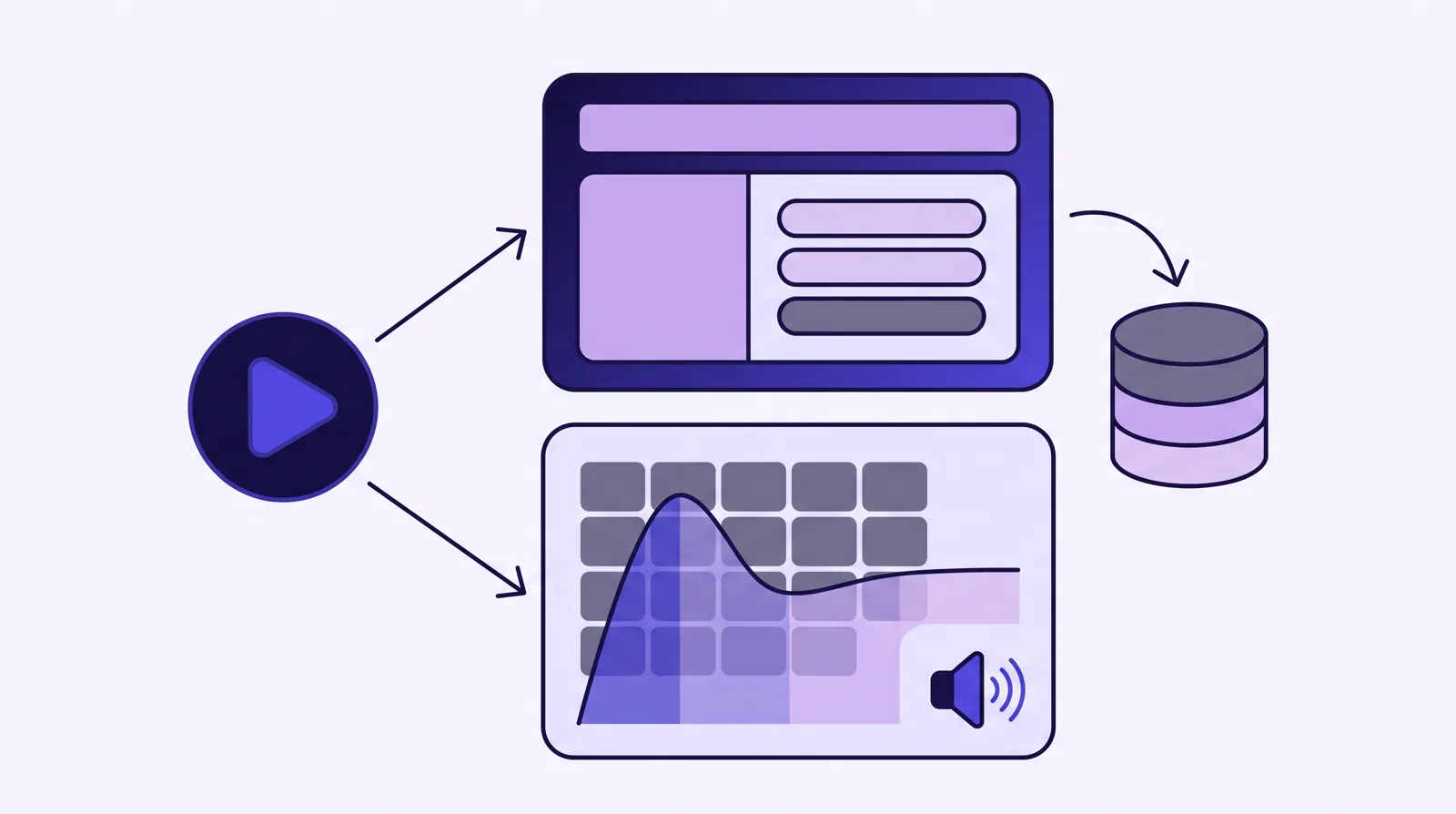
Answer that first and most of the decision falls out. A marketer running a VSL to Meta or TikTok traffic, who needs the video to close, wants Vidalytics's autoplay and its retention data. A B2B team embedding demos, webinars and explainer clips across a website, who wants leads scored and pushed into HubSpot, is the reader Wistia was designed for. Neither is a weaker product. They are answering different questions, and the mistake buyers make on this exact matchup is picking the famous general host for a job it was never built to do.
The two players
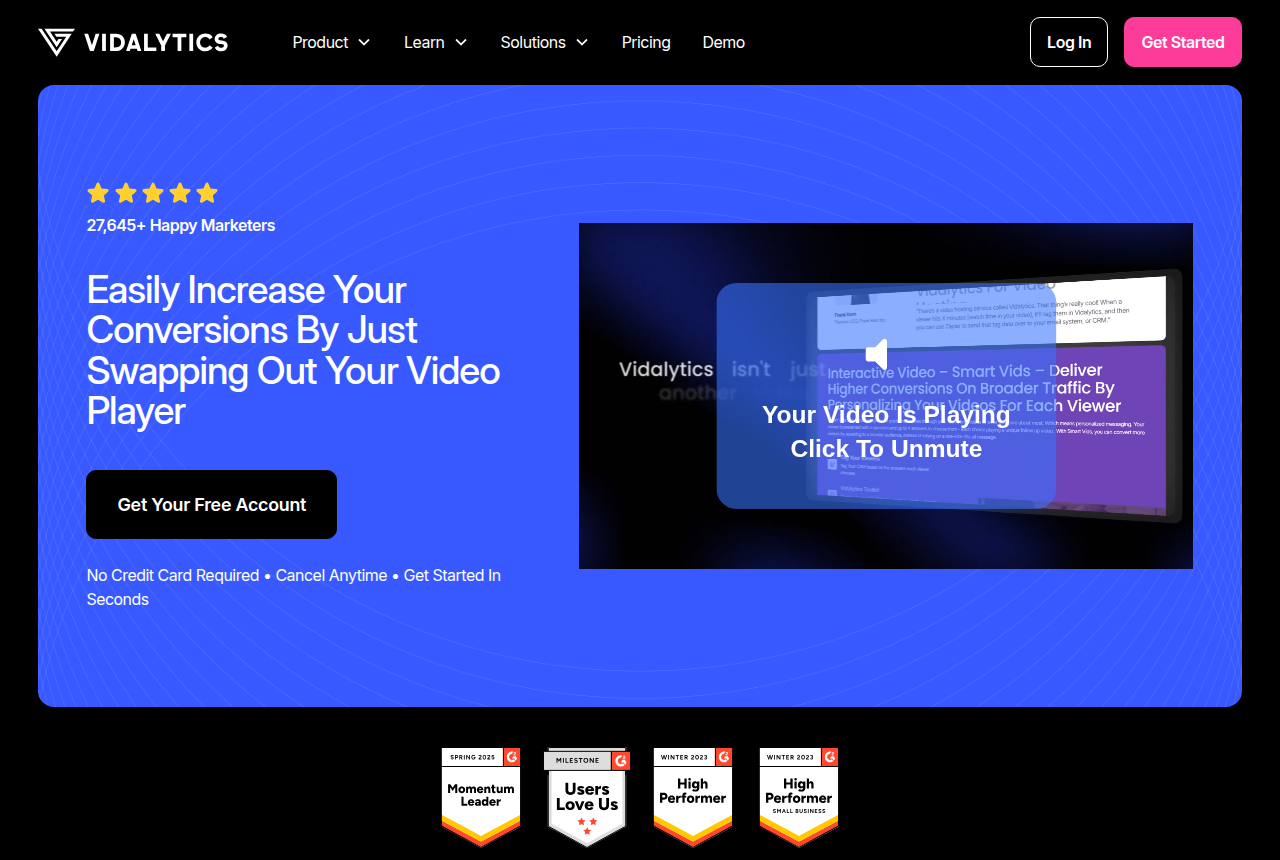
Vidalytics earns its place on sales pages with the player itself. Smart Autoplay starts muted where the browser blocks sound and restarts with sound on the viewer's first click, so the hook is heard from the top rather than lost to a silent opening. It carries timed CTA buttons, play gates and lead capture, and it has years of use behind it with a large, named direct-response audience. Its users credit that unmute-restart autoplay with the biggest conversion lifts, and the toolset around it is aimed at one outcome: turning a watch into a sale.
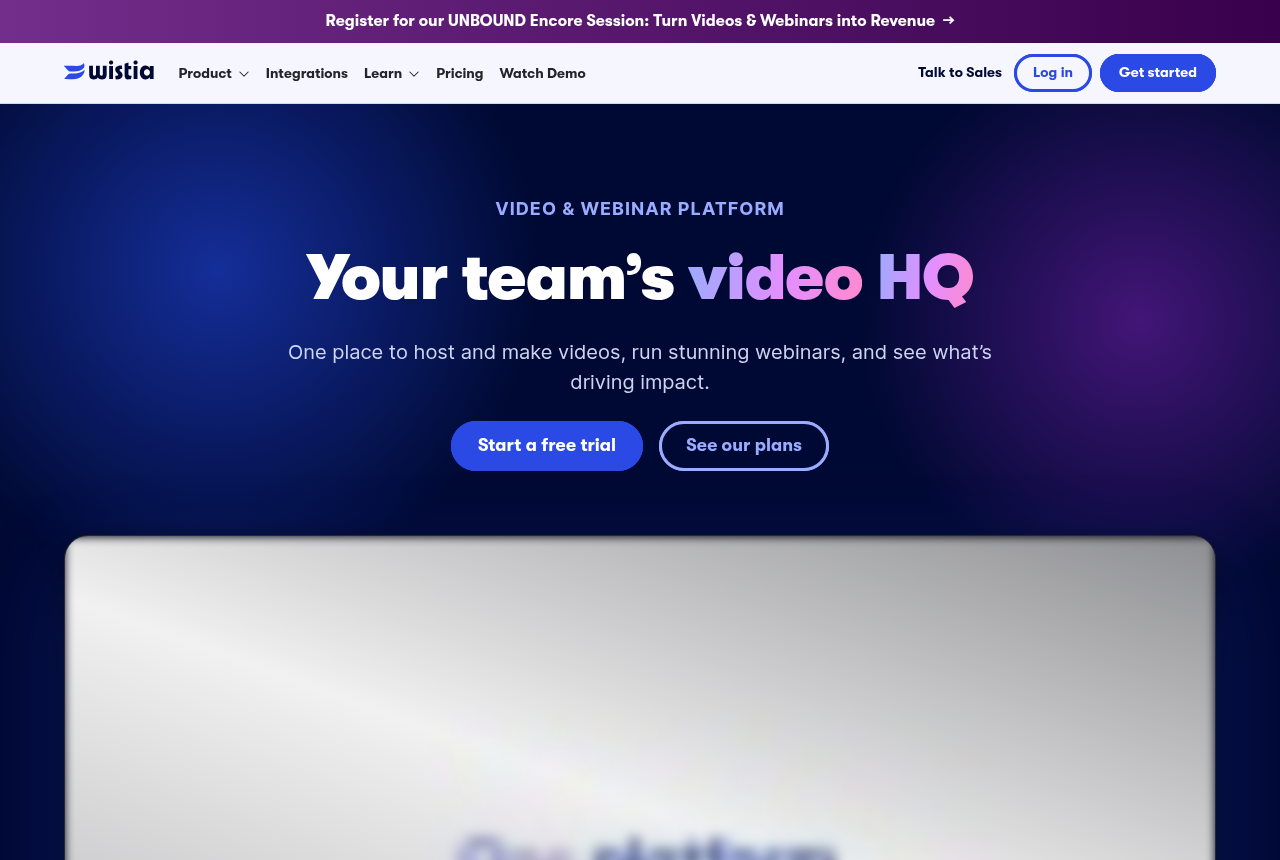
Wistia's player is one of the best-looking and fastest on the market. It is clean, ad-free, fully brandable, and it sits inside a real content platform: channels and galleries to organise a library, embeddable landing pages, and integrations that push viewing data into a marketing stack. What it does not have is the direct-response autoplay a VSL leans on. Its player is built to look right on a corporate site and to capture and route leads, not to hold a cold visitor through a twenty-minute pitch. Against Vidalytics's conversion toolkit, Wistia's selling features read as marketing infrastructure rather than a sales-page engine, because that is exactly what they are.
Analytics and attribution
Both tools give you good data, but they measure toward different ends. Vidalytics pins the exact second a viewer converted, draws heatmaps of where attention holds and drops, and segments watch behaviour by buyers versus non-buyers, so you can find the dead seconds in a long VSL and cut them. That is a conversion analytics stack, and it is the reason direct-response marketers pay for it over a general host.
Wistia's analytics are strong in their own lane. It draws engagement heatmaps per viewer, runs A/B tests on thumbnails and content, and on the Signals tier it scores leads on watch behaviour and syncs that scoring into HubSpot or Marketo. For a B2B team measuring which prospects are warming up across a content library, that is genuinely useful, and it is more pipeline tooling than Vidalytics offers. But it is built to qualify a lead for a sales team, not to tell a media buyer which second of a VSL lost the buyer.
Neither tool, though, closes the last loop for paid traffic. Neither posts the cart-verified sale back onto the individual play that earned it and fires that conversion to the ad platform server-side. Vidalytics stops at conversion tracking and CRM tags inside its own dashboard; Wistia's attribution is lead-scoring into a CRM, which is a different question from which ad click produced a purchase. If you buy media on the sale itself, that missing loop is the whole ballgame, and it is worth reading the segment below before you decide.
Pricing: metered player versus content platform
The two price on different axes, and the axis that decides your bill is not the same one for each. Vidalytics bills on bandwidth and video count; Wistia bills on storage, bandwidth and seats, and gates its automation behind a much higher tier.
Vidalytics has a Free Forever plan with 3 videos and 50GB, then Starter at $24 a month ($19 billed annually) for 5 videos and 100GB, Pro at $79 a month for 20 videos, and Premium at $149 a month for 50 videos with interactive Smart Vids and the API. Extra bandwidth runs around $0.33 a GB, so a long VSL served to heavy cold traffic can add overage on top of the plan. One thing worth naming: the analytics that make Vidalytics worth buying are gated. Video conversion tracking and heatmaps require at least the $79 Pro plan, so the Starter tier gives you the player without the conversion data. Budget for Pro if the analytics are the point. There is a 14-day trial on the paid plans.
Wistia has a genuinely useful free plan (25GB of storage, 200GB of bandwidth, one user, Wistia branding on the player), then Business at $79 a month billed annually, which removes the branding and adds CTAs, A/B testing and heatmaps, with extra users at $25 each. The marketing automation that is Wistia's real draw, lead scoring and the HubSpot or Marketo sync, lives on the Business plus Signals tier at $329 a month. So the like-for-like comparison depends on what you need: Wistia's $79 Business plan is close to Vidalytics's Pro on price, but the two are buying different things, and Wistia's headline capability costs four times as much. Prices checked September 2026.
Read both as a floor and count your own numbers. For a single VSL on paid traffic, Vidalytics's metered model maps to the way you actually use the tool. For a growing content library with several seats and a marketing team, Wistia's platform pricing is the cost of the platform, and the seat and Signals charges are where the bill really lands.
Where a dedicated attribution player fits
There is a third option that belongs on this page for one specific reader: the paid-traffic seller who buys media on the sale itself. Vidalytics and Wistia both stop inside their own dashboard. Vidalytics tracks conversions and tags a CRM; Wistia scores leads and syncs them to a marketing platform. Neither ties the actual, cart-verified purchase back onto the play that earned it and posts that conversion to the ad platform server-side. That is the job TrackPlay is built for.
TrackPlay is a VSL player and analytics platform for paid-traffic funnels, and attribution is its lead job. When the sale happens, the cart posts the verified purchase back onto the play that earned it, server to server, from seven direct-response carts including ClickBank, ClickFunnels, Kiwify and Digistore24, and TrackPlay fires that conversion server-side to Meta, TikTok and GA4 on the watch-time milestone you choose, deduping the browser and server events. Around that sits the same class of player Vidalytics offers, with sound-first autoplay and timed CTAs, plus per-second retention split into buyers and non-buyers, revenue per play, and split tests decided on the cart-verified sale under one embed so your ad links and campaign learning never reset. It bills on plays rather than bandwidth, every feature ships on every paid plan, and there is a free plan of 1,000 plays a month with no card, plus paid plans from $29 a month.
It is narrow by design. It is built for paid-traffic VSL conversion, not for general hosting or a B2B content library, so it has none of the channels, SEO pages or webinar tooling that make Wistia what it is, and it is a poor fit if the video's job is content marketing rather than a direct-response sale. That narrowness is the trade that buys the sale-level attribution in the first place, and for a cold-traffic VSL you still get the full player, the buyers-versus-non-buyers retention and the postbacks it is built around. It is also very new, with little third-party review footprint yet and invite-only signup, so you cannot lean on outside proof before you commit paid traffic. That is what you would expect of a platform this recent, and the free plan lets you judge it on your own numbers first.
Which one for you
Pick Vidalytics if you run VSLs or sales videos to paid traffic and want a proven conversion player. Its per-second retention, heatmaps, buyers-versus-non-buyers segments and sound-first autoplay are aimed squarely at lifting sales, and its long track record and named user base are reassurance a newer tool cannot offer yet. Just budget for the Pro plan, because the conversion analytics live there.
Pick Wistia if your video's job is content marketing rather than a cold-traffic sale: product demos, webinars, explainers and thought-leadership clips spread across a website, with leads scored on watch behaviour and pushed into HubSpot or Marketo. It is one of the most polished platforms in video, with more than 440,000 customers behind it, and for a B2B marketing team it is the safer, more capable home. Just know that its automation lives on the $329 tier and that it is not built for the sound-first, sell-on-the-page job a VSL demands.
Pick a dedicated attribution player like TrackPlay if you run cold paid traffic to a VSL and optimize on the sale. When you need the cart-verified conversion posted back to Meta, TikTok and GA4 server-side, and retention split by who actually bought, it does a job neither Vidalytics nor Wistia attempts. If your video is content marketing rather than a direct-response sale, it is not the tool, and Wistia is the better call.
Our pick
Vidalytics
Vidalytics is the pick if you want a proven direct-response player with deep conversion analytics and can live with bandwidth-based pricing.
Frequently asked questions
Is Vidalytics or Wistia better for a VSL?
How much do Vidalytics and Wistia cost?
Does Wistia have sound-first autoplay for VSLs?
Does either one post the sale back to Meta or TikTok?
Sources
The vendors' own pages
Related reading

Written by
Mara Vance
Editor
Mara edits the reviews and roundups on VSL Host Report. She looks at how a video player behaves on cold paid traffic: autoplay and unmute behaviour, per-second retention, timed CTAs, lead gates and load speed. She also maps what each host really costs, whether it bills per play, per gigabyte or per seat, and rebuilds the monthly bill for a typical VSL funnel. For each piece she reads long-term user reports across forums and review sites, works through the vendor's own docs and pricing, and confirms the numbers before a verdict goes live.
Last checked 2026-09-30