Skip to content
Menu

The ranked roundup

The best video hosts for VSLs

Six hosts for VSLs and sales videos, ranked on what selling actually needs: how the player behaves on cold paid traffic, how deep the retention analytics go, whether it ties the watch to the sale, and what it costs. Prices checked September 2026.

6
hosts ranked
5
buyer situations
Per play
vs per gigabyte
Sep 2026
prices checked

By Mara Vance, reviewed by the VSL Host Report desk. Updated September 2026.

Search "best video hosting" and you get Wistia and Vimeo. They are good products, but they are built for content libraries and brand video. A VSL is a different job: a stranger on cold paid traffic has to watch, believe and buy in one sitting. That rewards a different set of features, and it is what we rank on here.

We do not run these tools on live campaigns. We read what long-term users report, work through each vendor's own documentation and pricing, and verify the numbers before a verdict goes live. The ranking below is ordinal: a numbered order with one clear pick per situation, not a score we then have to defend cell by cell.

Quick answer

TrackPlay is the pick if you run paid traffic to a VSL and need every play tied to the actual sale. Vidalytics is the pick if you want a proven conversion player and can live with bandwidth pricing. Wistia and Vimeo are the pick only if your video's job is content marketing, not selling.

At a glance

How the six compare

Billing model and sale attribution are the two things that decide your real cost and whether your ad platform learns from a sale.

Host Best for From Billing Sale attribution
TrackPlay Paid-traffic VSLs $29/mo Per play Server-side postbacks
Vidalytics Direct response $19/mo Bandwidth + videos Conversion tracking
Panda Video Courses + VSL $17.90/mo Flat + bandwidth Tracking pixels
Voomly Creation + hosting $9/mo Flat tiers None
Wistia B2B content $79/mo Storage + seats Signals add-on
Vimeo General hosting See vimeo.com Subscription None

The ranking

The best video hosts for VSLs, ranked

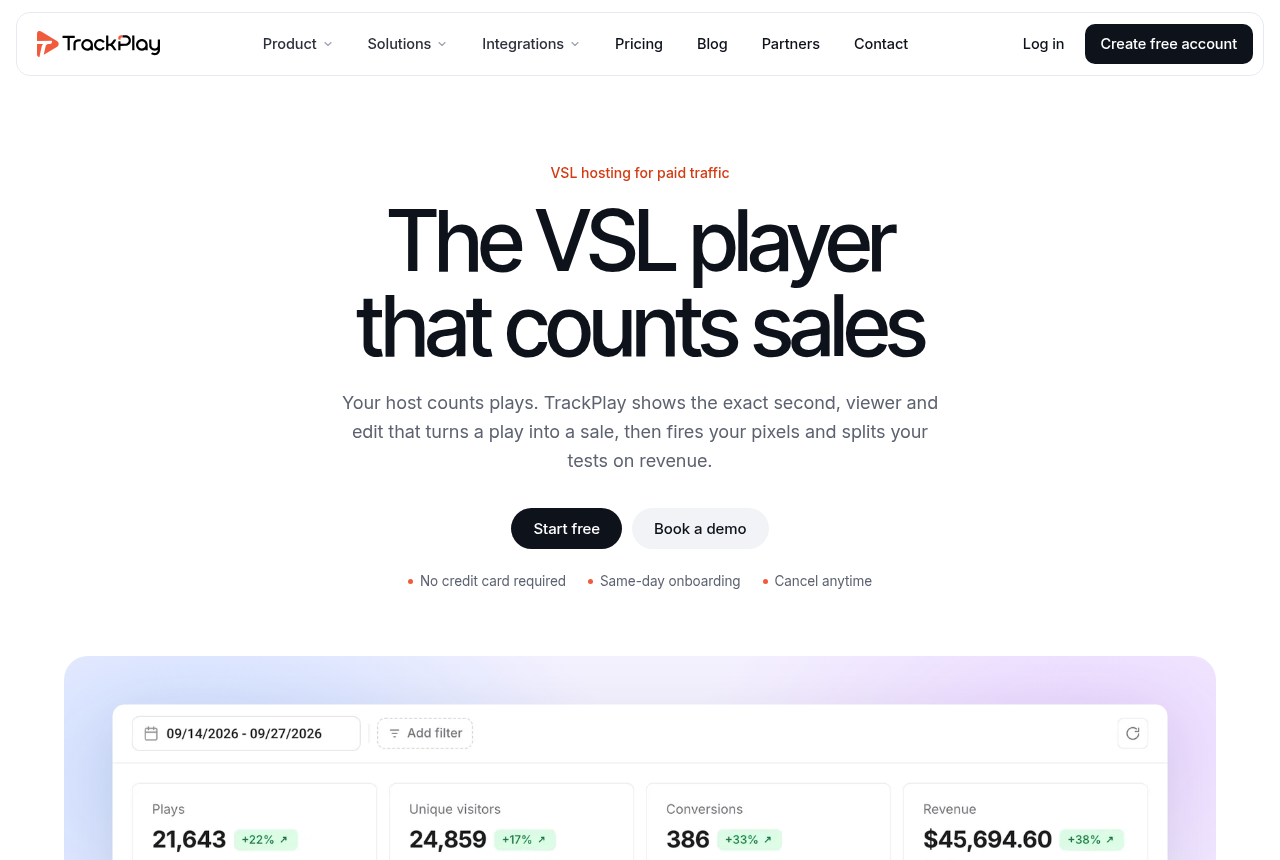
TrackPlay home page: the headline 'The VSL player that counts sales' over a dark indigo hero.

1.TrackPlay — best for paid-traffic vsls

TrackPlay is the pick if you run paid traffic to a VSL and need every play tied to the actual sale.

Strengths

  • Split tests are settled on the cart-verified sale, with a p-value and confidence interval, and variants run under one embed, so your ad links and campaign learning never reset.
  • Conversions post back to Meta, TikTok and GA4 server-side on the watch-time milestone you choose, so the ad platform optimizes on real sales instead of a page-load pixel.
  • Per-second retention is split into buyers and non-buyers, with hook rate, hold rate and revenue per play, so you can see the exact seconds to cut or protect.
  • Every feature is on every plan and billing is on plays, not bandwidth or seats. The free plan is 1,000 plays a month with no card, and paid plans start at $29.

Watch-outs

  • It is narrow by design: built for paid-traffic VSL conversion, not general hosting, so it lacks the channels, SEO pages and webinar tooling of a Wistia. If your video's job is content marketing, use a general host for that job. For a cold-traffic VSL you still get the full player, per-second retention and sale attribution it is built around.
  • It is very new, so outside proof is thin: the testimonials are on-site, there is little third-party review footprint yet, and signup is invite-only right now. That is what you would expect of a platform this recent, and the free plan lets you judge it on your own numbers before you spend on traffic.
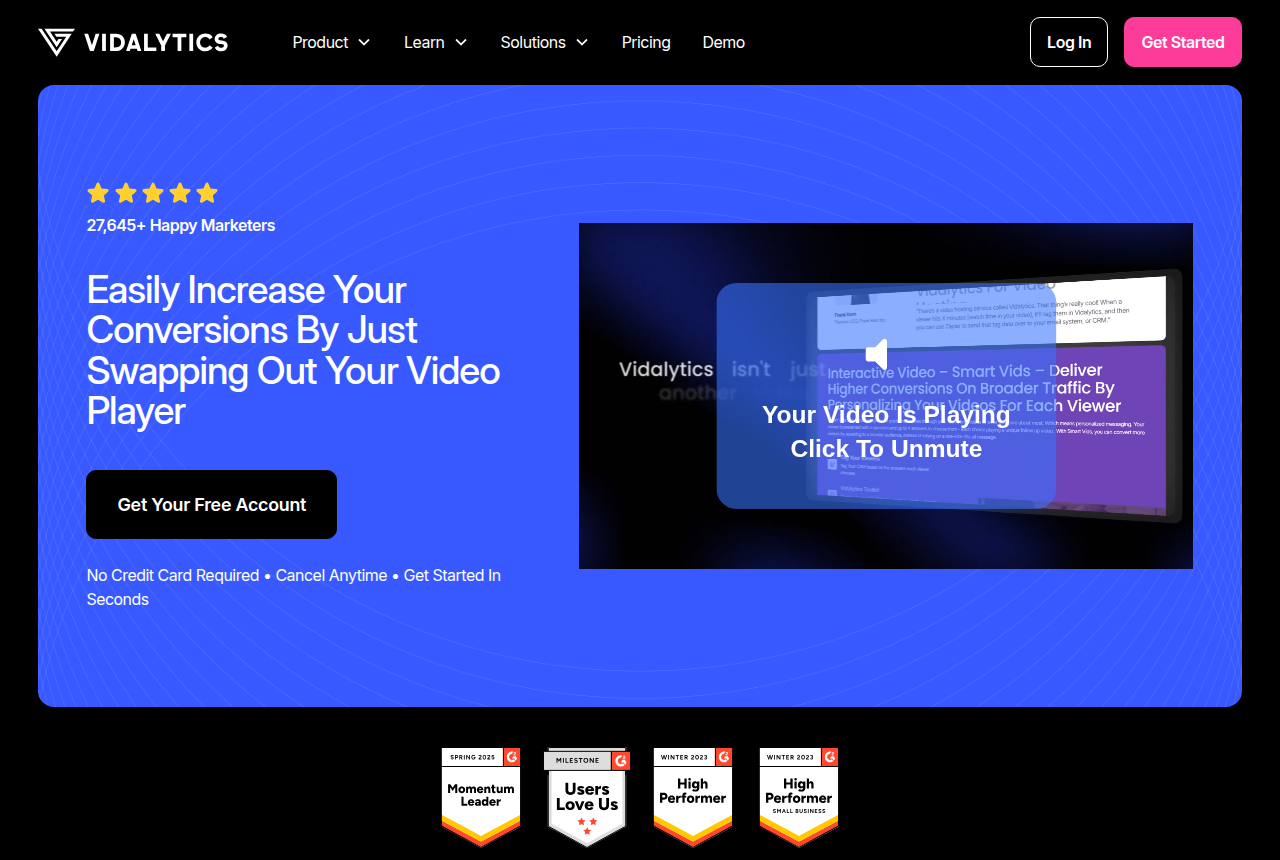
Vidalytics home page, headlined 'Easily increase your conversions by just swapping out your video player'.

2.Vidalytics — best for direct response

Vidalytics is the pick if you want a proven direct-response player with deep conversion analytics and can live with bandwidth-based pricing.

Strengths

  • Video conversion tracking pins the exact second a viewer converted, and heatmaps plus buyers-versus-non-buyers segments show where attention drops.
  • Smart Autoplay falls back to muted autoplay and restarts with sound on the first click, the feature its users credit for the biggest conversion lifts.
  • A large, named direct-response user base and years in market give it a track record newer players do not have yet.

Watch-outs

  • Pricing is on bandwidth and video count, so a long VSL on heavy cold traffic can run up overage at about $0.33 a GB.
  • Attribution stops at conversion tracking and CRM tags. It does not post the cart-verified sale back to the ad platforms server-side.
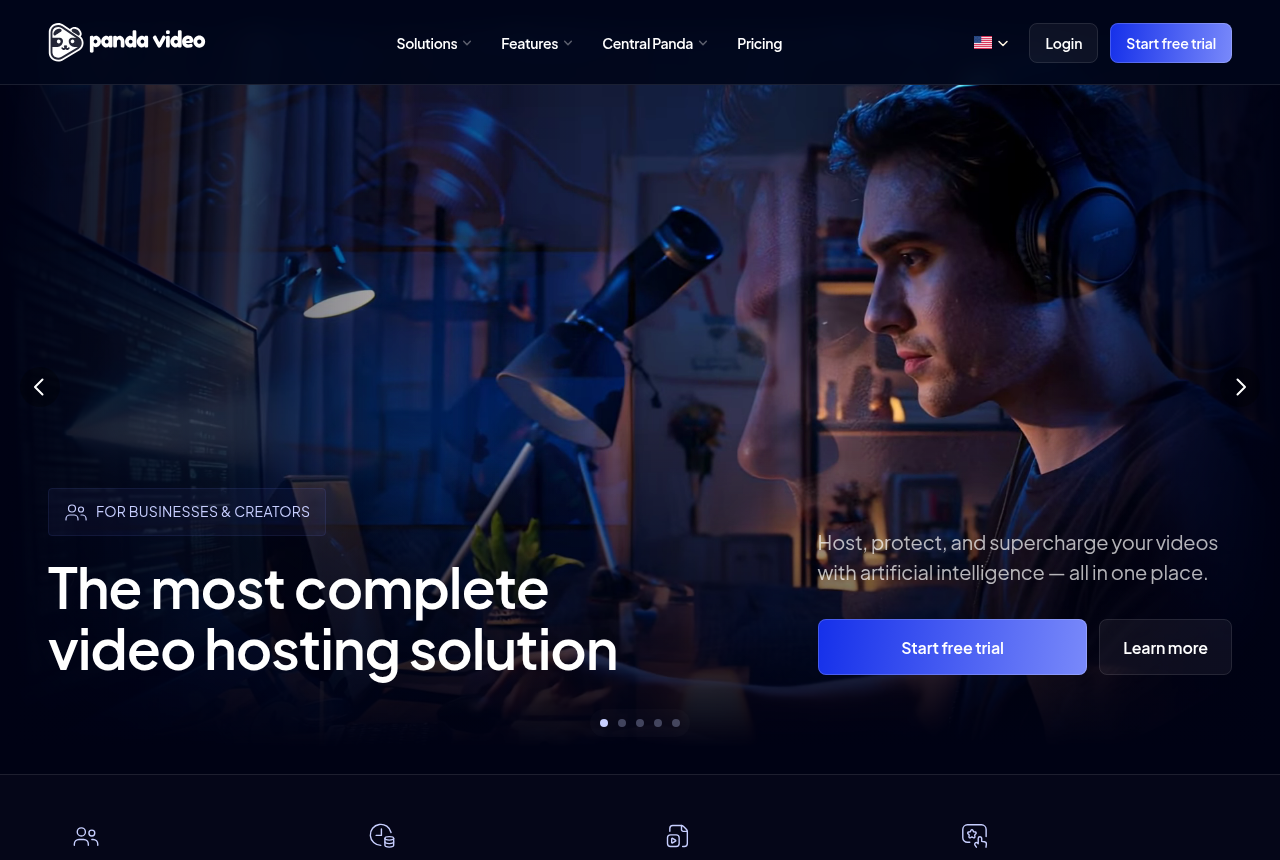
Panda Video home page, headlined 'The most complete video hosting solution'.

3.Panda Video — best for courses + vsl

Panda Video is the pick if you sell courses or run affiliate offers and want VSL features with serious anti-piracy.

Strengths

  • Real VSL features (Smart Autoplay, A/B tests, a dummy progress bar, tracking pixels, a video funnel) sit alongside the strongest anti-piracy in this set: DRM, watermarking and anti-download.
  • It runs on an AWS content network for fast global delivery, and imports from Vimeo in minutes with a Chrome extension.
  • AI tooling is deep for course sellers, with an in-video tutor and dubbing into more than 30 languages.

Watch-outs

  • Its pixels fire from the browser and it reports inside its own dashboard, so it stops at conversion tracking. It does not post the cart-verified sale back to the ad platforms server-side the way a dedicated attribution player does.
  • It serves courses and affiliates as much as VSLs, so its conversion analytics are lighter than a dedicated direct-response player's, and its metered bandwidth can run up overages on a long VSL served to heavy cold traffic.
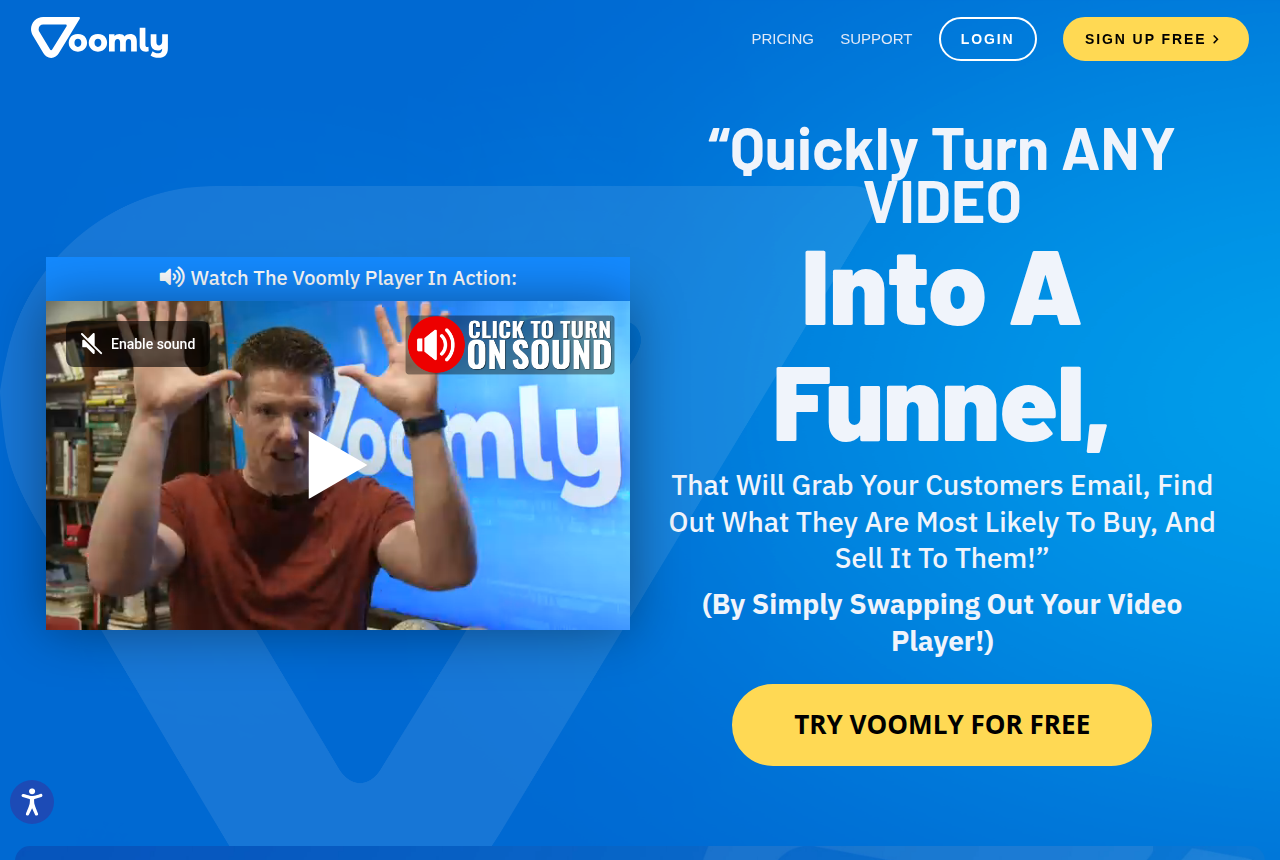
Voomly home page showing its drag-and-drop video creation and hosting studio.

4.Voomly — best for creation + hosting

Voomly is the pick if you want to make videos and host them cheaply, with unlimited bandwidth, in one suite.

Strengths

  • Paid plans include unlimited bandwidth, so a long VSL on heavy traffic will not surprise you with an overage bill.
  • It bundles video creation tools such as Doodly, Toonly and Talkia with hosting, which helps if you also make the videos.
  • At $9 a month it is the cheapest entry point in this comparison.

Watch-outs

  • It is a creation suite first. Its analytics are engagement graphs and heatmaps, with no sale-level attribution or pixel postbacks.
  • The player's conversion features are basic next to Vidalytics or TrackPlay.
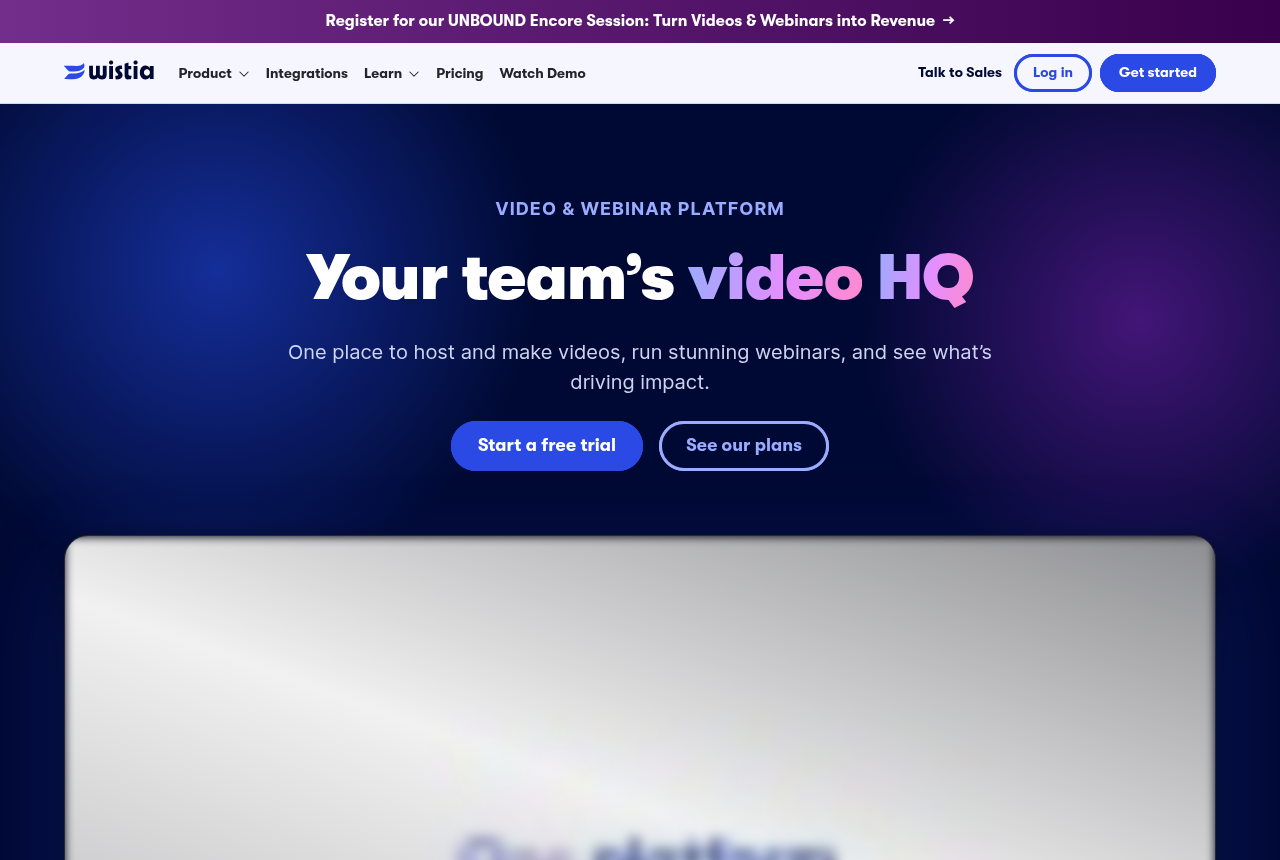
Wistia home page for its business video hosting and marketing platform.

5.Wistia — best for b2b content

Wistia is the pick if your video's job is B2B content marketing and lead capture, not cold-traffic selling.

Strengths

  • A polished, fast, ad-free player with heatmaps, A/B testing and, on the Signals tier, real marketing automation: lead scoring and HubSpot or Marketo sync.
  • More than 440,000 customers and a long track record make it the safe choice for a B2B content library.

Watch-outs

  • It is built for content marketing, not cold-traffic selling. There is no sound-first unmute-restart autoplay and no cart-level sale attribution.
  • The marketing-automation tier jumps to $329 a month, and extra seats are $25 each.
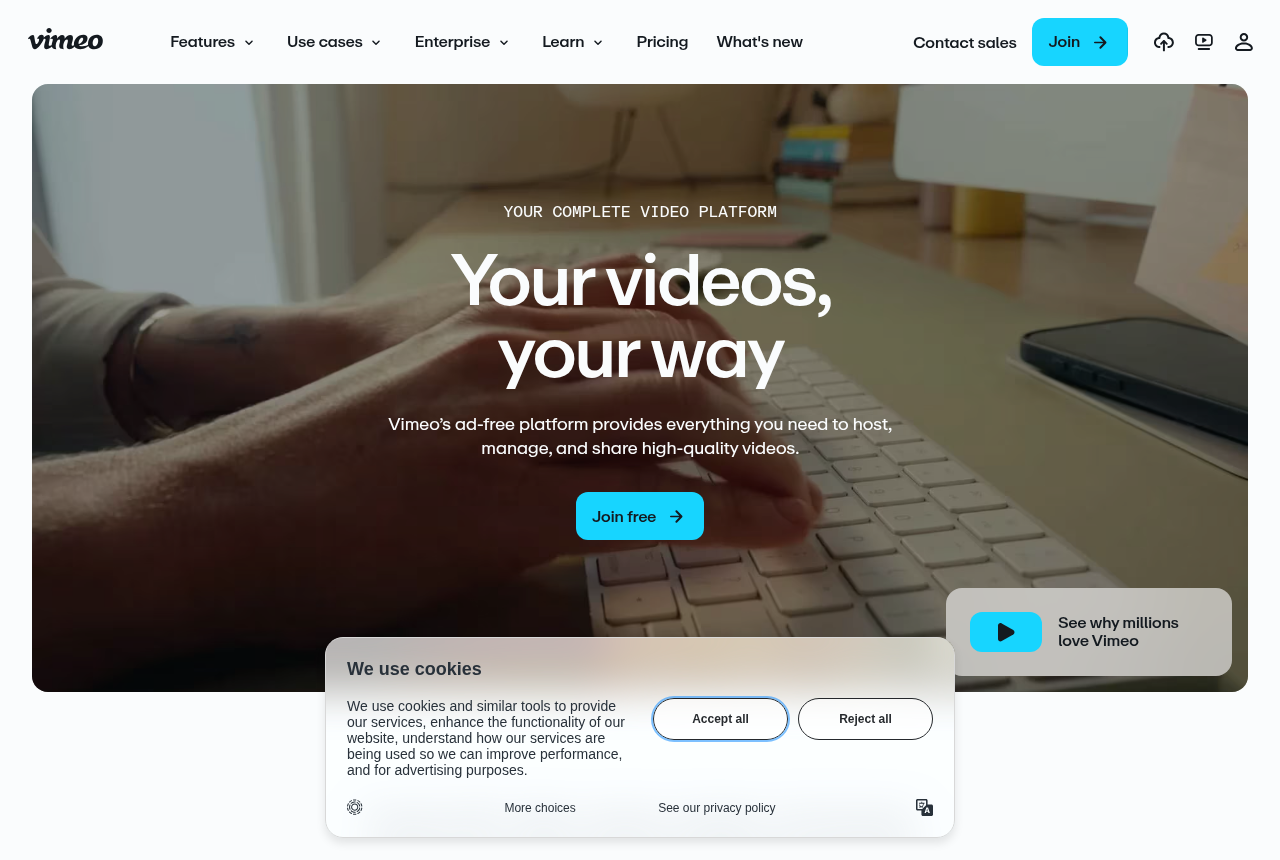
Vimeo home page for its general-purpose video hosting and creation tools.

6.Vimeo — best for general hosting

Vimeo is the pick if you need dependable general-purpose hosting and creation, but not paid-traffic conversion features.

Strengths

  • Reliable, well-known general-purpose hosting and creation, with a clean player and broad app support.
  • A reasonable home for a content library or brand video.

Watch-outs

  • It is not built for VSLs. There is no sound-first conversion autoplay, no buyers-versus-non-buyers retention and no sale attribution.
  • Direct-response users repeatedly report bandwidth costs and switching away for conversion reasons.

Winners by situation

Which one is right for you

Running paid traffic and optimizing on sales: TrackPlay wins, with Vidalytics the runner-up. TrackPlay ties the cart-verified sale to the exact play and posts it back to Meta, TikTok and GA4 server-side. Vidalytics gets you conversion tracking and heatmaps without that server-side postback.

A proven player on a budget: Vidalytics wins, with Panda Video close behind. Both restart with sound on unmute and show where attention drops; Panda adds heavy anti-piracy for course sellers.

Selling courses and running the odd VSL: Panda Video wins, with Voomly the runner-up. Panda protects content with DRM; Voomly bundles creation tools and unlimited bandwidth.

B2B content marketing, not cold-traffic selling: Wistia wins, with Vimeo the runner-up. This is where a VSL-first player is the wrong tool and a content host is the right one.

What to avoid

  • Judging a host on view counts. For selling, per-second retention split by buyers and non-buyers and revenue per play matter. Raw views do not.
  • Assuming bandwidth pricing is always cheaper. A long VSL on heavy cold traffic burns bandwidth fast. Model your own numbers before you commit.
  • Using a general host for a cold-traffic VSL. Without sound-first autoplay and sale attribution, you are optimizing blind.

How we evaluated these

We judged each host on five things: player behaviour on paid traffic (autoplay, unmute, timed CTAs, load speed), depth of retention analytics, how it attributes the sale, pricing model, and what long-term users report. We read each vendor's own docs and pricing pages and verified prices before publishing. We do not run the tools on live campaigns. Full method: how we research.

How to choose

Start with the job. If the video sells to cold paid traffic, weight attribution and player conversion features first, then price. If the video teaches or markets to a warm audience, weight the content-library and lead-capture features, and a general host is fine. Then map your traffic: heavy volume on long videos favours a play-based or unlimited-bandwidth plan over per-gigabyte billing.

What is VSL hosting?

VSL hosting is video hosting tuned for a video sales letter: a player that autoplays and holds attention on cold traffic, analytics that show exactly where viewers drop off and convert, and, on the strongest tools, attribution that ties the watch to the sale so your ad platform can optimize for buyers. It is a narrower job than general video hosting, and it is the job this site ranks on.

Frequently asked questions

What is the best video host for a VSL?
For a VSL on paid traffic that needs sale-level attribution, TrackPlay is our pick. Vidalytics is the established alternative with deep conversion analytics. Wistia and Vimeo are built for content marketing, not cold-traffic selling.
Do I need a special video host for sales videos?
Yes, if the video sells to cold traffic. General hosts lack sound-first unmute-restart autoplay, buyers-versus-non-buyers retention and sale attribution, which are the features that move a VSL conversion rate.
Is per-play or per-gigabyte pricing cheaper?
It depends on video length and watch patterns. A long VSL on heavy cold traffic can run up bandwidth overage; play-based pricing can be cheaper or dearer depending on how much each viewer watches. There is no universal winner, so model your own numbers.
Mara Vance

Written by

Mara Vance

Editor

Mara edits the reviews and roundups on VSL Host Report. She looks at how a video player behaves on cold paid traffic: autoplay and unmute behaviour, per-second retention, timed CTAs, lead gates and load speed. She also maps what each host really costs, whether it bills per play, per gigabyte or per seat, and rebuilds the monthly bill for a typical VSL funnel. For each piece she reads long-term user reports across forums and review sites, works through the vendor's own docs and pricing, and confirms the numbers before a verdict goes live.

marav@vslhostreport.com

Last checked 2026-09-28